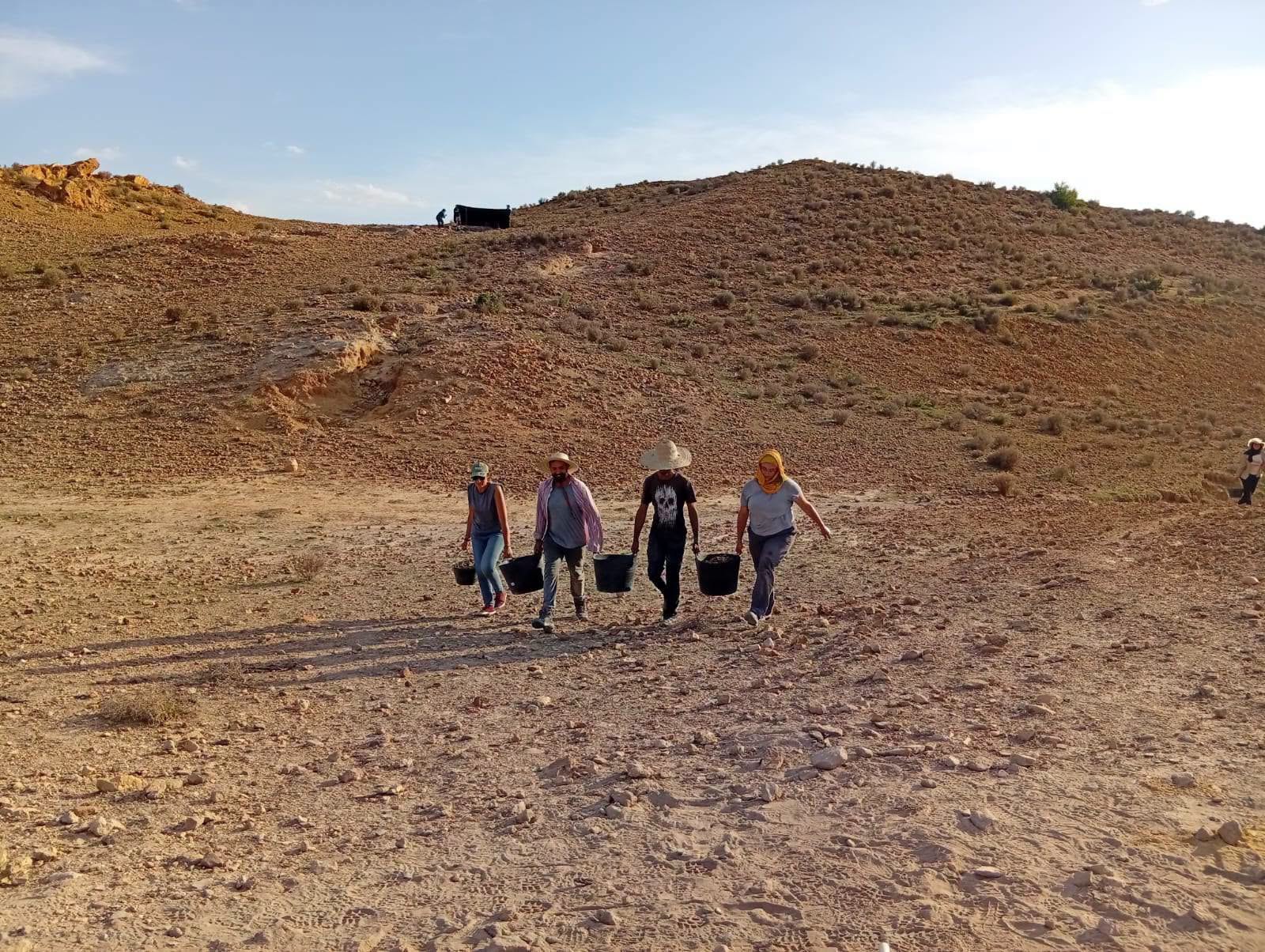
As part of an international cooperation agreement between the National Heritage Institute and the University of Cambridge, the National Heritage Institute carried out a survey campaign in the Oued Zeroud basin (Kairouan Governorate) and Oued Tessa (Kef Governorate), dedicated to the study of the protohistory of central-northern Tunisia, spanning the 3rd to the early 1st millennium BC.
The aim of the project is to gain a better understanding of patterns of settlement, the earliest farming communities, their settlement patterns and their interactions with their environment – a period that remains insufficiently documented, largely due to the limited number of stratified sites and radiocarbon dates.
The research is based on a comparative approach between two distinct geographical and environmental areas: the Zeroud wadi basin, in a semi-arid steppe context, and the middle Medjerda basin, in a sub-humid tellic region.
The first field mission focuses in particular on two areas: the lower Zeroud wadi basin and the Khanguet Afres valley, between Zouarine and Sers. The work will, in particular, enable a re-examination of the chronology of several archaeological remains, notably the funerary structures traditionally attributed to the Numidian period.
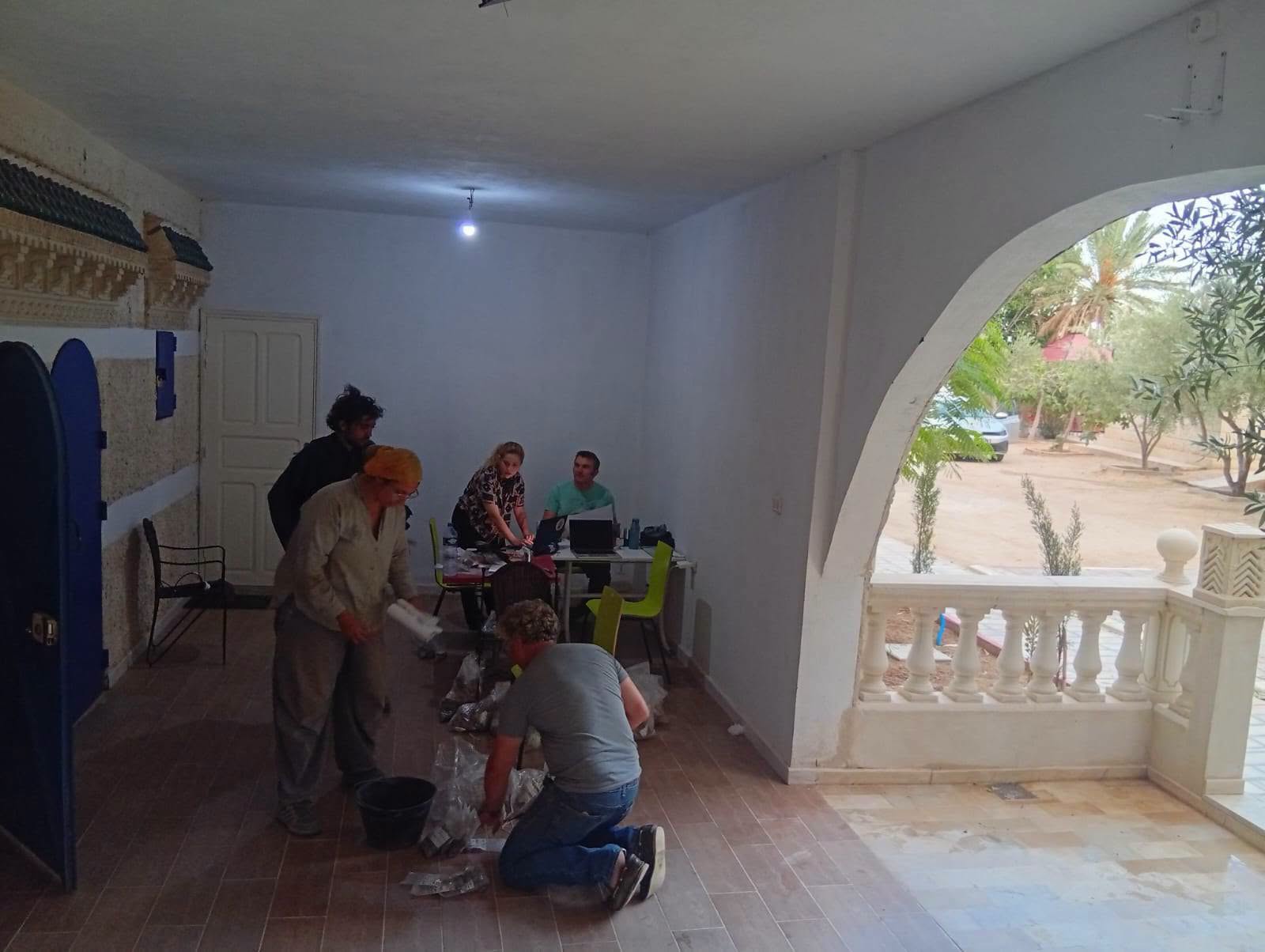
The fieldwork relies primarily on intensive and systematic foot surveys, supplemented by DGPS surveys, photogrammetric coverage using drones, geomorphological observations and the collection of samples for archaeobotanical and material analysis, as well as radiocarbon dating.
Share this content:







Leave a Reply