[:fr]
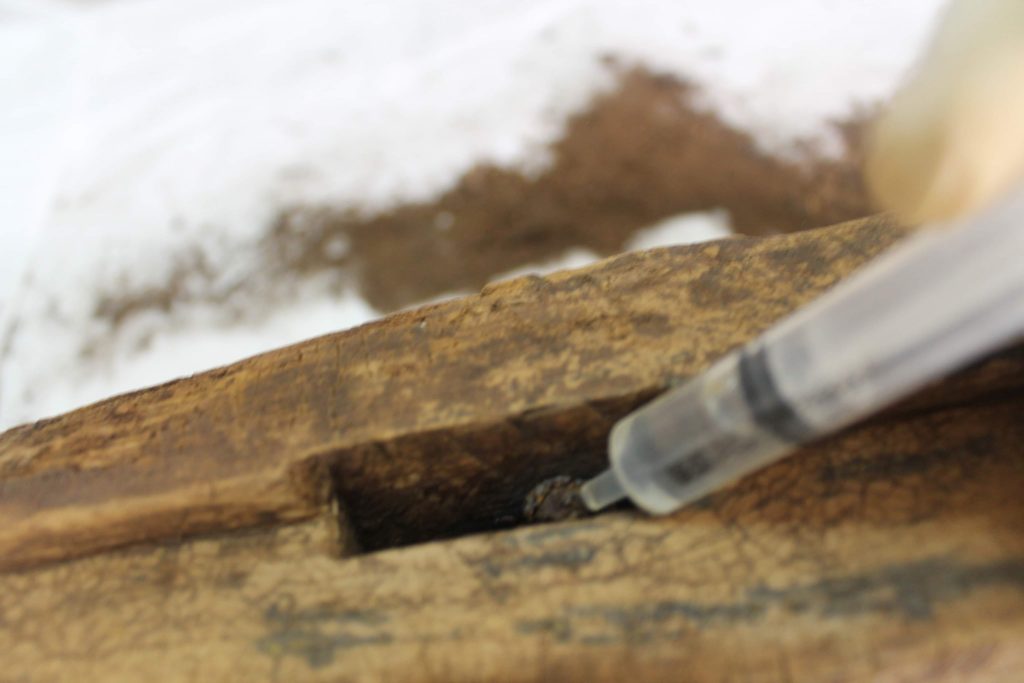
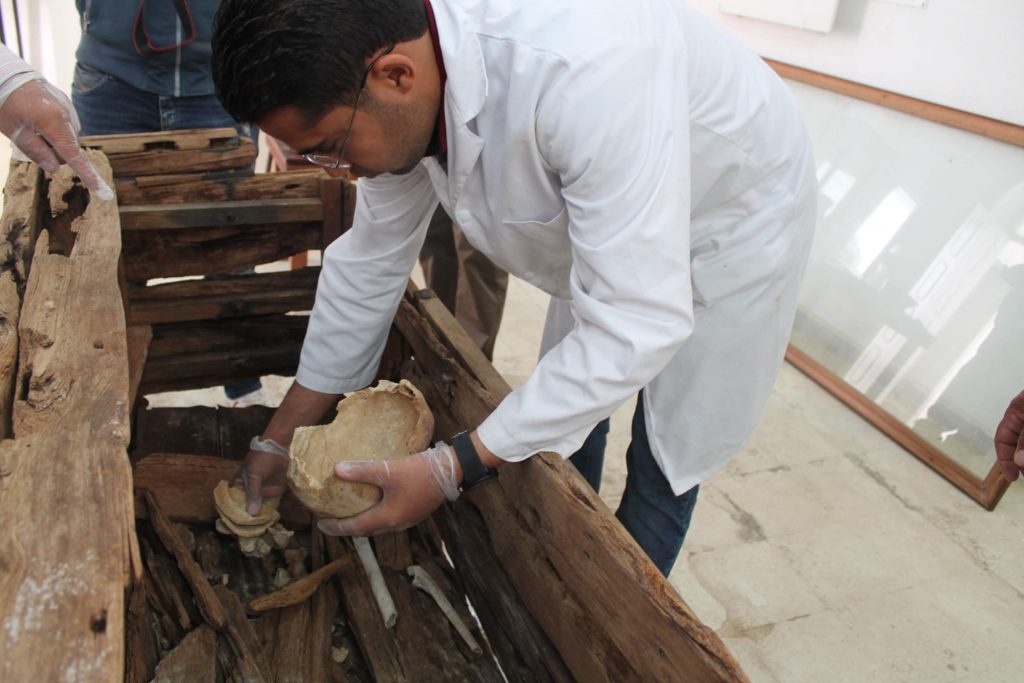
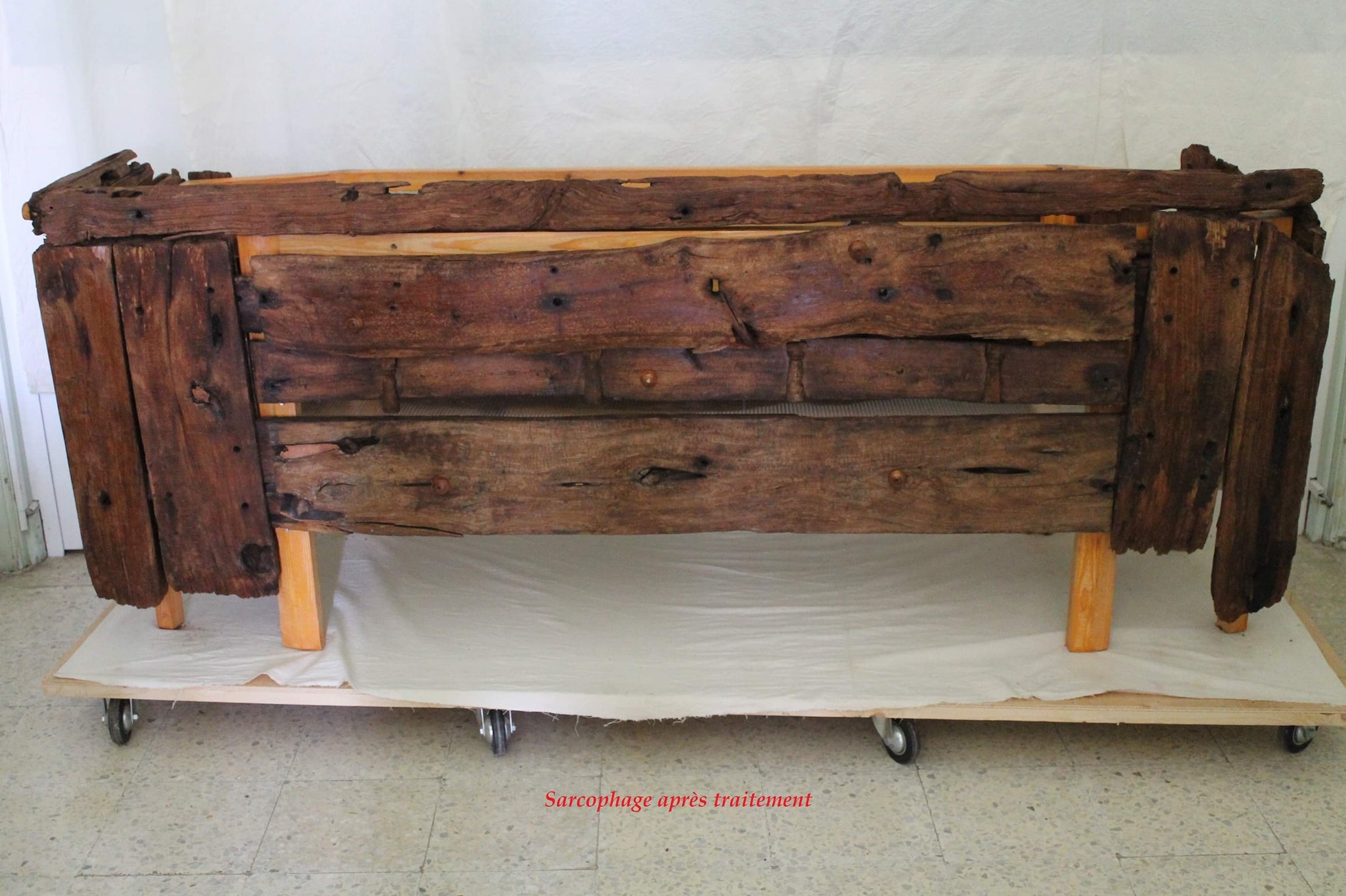
Restauration d’un sarcophage en bois pour le musée archéologique de Lamta, datant du IIe siècle av. J. C.
M. Walid Al-Tayeb, au laboratoire de la conservation et de la restauration des collections culturelles, avec la contribution d’un groupe de travail des agents de l’Institut National du Patrimoine et la Division du Développement Muséographique, a accompli les travaux de sauvegarde et de restauration d’un sarcophage en bois pour le Musée Archéologique de Lamta datant du IIe siècle avant J.C., qui a été découvert dans les cimetières puniques de Lepti Minus. Sa mauvaise conservation vient de son exposition à de nombreux facteurs physico-chimiques et climatiques qui ont directement contribué à la détérioration de son état.
Ce sarcophage appartient à un ensemble de sarcophages en bois qui ont été trouvés dans d’autres cimetières dans la région du sahel, et ils étaient à l’origine utilisés pour stocker des objets personnels.
Le sarcophage en bois contient des informations historiques importantes sur les techniques de fabrication et d’assemblage, les outils utilisés et les types de bois. Tous ces détails historiques et analytiques sont à l’étude et seront présentés ultérieurement.
Ce type d’intervention scientifique est considéré comme le premier du genre à l’Institut national du patrimoine à sauver un sarcophage en bois datant de plus de 2300 ans.
Tous nos remerciements vont à tous ceux qui ont contribué de près ou de loin à la réussite de ce projet, M. Habib Ben Younes, M. Mohamed Badi Bidouh, M. Lotfi Belhouichet, M. Walid Al-Tayeb et Mme Boutheina Maraoui Talmini, M. Mohammad Ali Al-Hsairi, Mme Rym Al-Younsi, et toute l’équipe de l’atelier de menuiserie.
![]() |
![]() |
![]() |
![]() |
[:ar]
صيانة و ترميم تابوت خشبي لصالح المتحف الأثري بلمطة يعود للقرن الثاني قبل الميلاد
أشرف السيد وليد الطيب بمخبر المحافظة وترميم المجموعات الثقافية بمساهمة فريق عمل من أعوان المعهد الوطني للتراث ودائرة التنمية المتحفية، على أشغال صيانة وترميم تابوت خشبي لصالح المتحف الأثري بلمطة يعود للقرن الثاني قبل الميلاد وقع إكتشافه في المقابر البونية بلمطة (Lepti Minus)، وهو في حالة حفظ سيئة نظرا لتعرضه للعديد من العوامل الفيزيوكيميائية و المناخية التي ساهمت بشكل مباشر في تدهور حالته.
ينتمي هذا التابوت لسلسلة التوابيت الخشبية التي تم العثور عليها بمقابر أخرى بجهة الساحل، و كانت هذه التوابيت في الأصل تستعمل لحفظ الأغراض الشخصية.
يحمل التابوت الخشبي معلومات تاريخية هامة حول تقنيات الصنع والتجميع والأدوات المستعملة وأنواع الأخشاب المعتمدة، كل هذه التفاصيل التاريخية والتحليلية بصدد الدرس وستعرض في وقت لاحق. ويعتبر هذا النوع من التدخلات العلمية الأول من نوعه في المعهد الوطني للتراث لإنقاذ تابوت يفوق عمره 2300 سنة.
كل الشكر لكل من ساهم من قريب أو من بعيد في إنجاح هذا المشروع وعلى رأسهم السيد الحبيب بن يونس، السيد محمد بديع بدوح، السيد لطفي بالهوشات، السيد وليد الطيب و السيدة بثينة مرعوي تلميني، السيد محمد علي الحصايري، السيدة ريم اليونسي، وكافة فريق ورشة النجارة.
![]() |
![]() |
![]() |
![]() |
[:en]
Restoration of a wooden sarcophagus for the Archaeological Museum of Lamta, dating from the 2nd century BC. J. C.
Mr. Walid Al-Tayeb, at the Laboratory of Conservation and Restoration of Cultural Collections, with the contribution of a working group of agents of the National Heritage Institute and Museographic Development Division, completed the work safeguard and restoration of a wooden sarcophagus for the Archaeological Museum of Lamta dating from the 2nd century BC, which was discovered in the Punic cemeteries of Lepti Minus. Its poor conservation comes from its exposure to many physicochemical and climatic factors which have directly contributed to the deterioration of its condition.
This sarcophagus belongs to a set of wooden sarcophagi that have been found in other cemeteries in the Sahel region, and they were originally used to store personal items.
The wooden sarcophagus contains important historical information on manufacturing and assembly techniques, the tools used and the types of wood. All of these historical and analytical details are under study and will be presented later.
This type of scientific intervention is considered the first of its kind at the National Heritage Institute to restore a wooden sarcophagus dating back more than 2,300 years.
Our thanks go to all those who contributed from near or far to the success of this project, Mr. Habib Ben Younes, Mr. Mohamed Badi Bidouh, Mr. Lotfi Belhouichet, Mr. Walid Al-Tayeb and Ms. Boutheina Maraoui Talmini , Mr. Mohammad Ali Al-Hsairi, Mrs. Rym Al-Younsi, and the whole team of the carpentry workshop.
![]() |
![]() |
![]() |
![]() |
[:]
![lab_kai6-1024x683 [:fr]Restauration d'un sarcophage en bois pour le musée archéologique de Lamta[:ar]صيانة و ترميم تابوت خشبي لصالح المتحف الأثري بلمطة[:en]Safeguard and restoration wooden sarcophagus for the Archaeological Museum of Lamta[:]](http://www.inp2020.tn/wp-content/uploads/2021/02/lab_kai6-1024x683.jpg)
![lab_kai3-1024x768 [:fr]Restauration d'un sarcophage en bois pour le musée archéologique de Lamta[:ar]صيانة و ترميم تابوت خشبي لصالح المتحف الأثري بلمطة[:en]Safeguard and restoration wooden sarcophagus for the Archaeological Museum of Lamta[:]](http://www.inp2020.tn/wp-content/uploads/2021/02/lab_kai3-1024x768.jpg)
![lab_kai2-1024x683 [:fr]Restauration d'un sarcophage en bois pour le musée archéologique de Lamta[:ar]صيانة و ترميم تابوت خشبي لصالح المتحف الأثري بلمطة[:en]Safeguard and restoration wooden sarcophagus for the Archaeological Museum of Lamta[:]](http://www.inp2020.tn/wp-content/uploads/2021/02/lab_kai2-1024x683.jpg)
![lab_kai1-1024x683 [:fr]Restauration d'un sarcophage en bois pour le musée archéologique de Lamta[:ar]صيانة و ترميم تابوت خشبي لصالح المتحف الأثري بلمطة[:en]Safeguard and restoration wooden sarcophagus for the Archaeological Museum of Lamta[:]](http://www.inp2020.tn/wp-content/uploads/2021/02/lab_kai1-1024x683.jpg)